Learn how to remove hard water buildup from washing machines naturally. Fix slow filling, protect heating elements, and save money today!
How to Remove Hard Water Buildup From Washing Machines: The Ultimate Technician’s Blueprint
Look, I get it, appliance maintenance is boring but ignoring the invisible chalky crust growing inside your laundry setup is a quick way to land a massive repair bill. You throw your clothes into the machine, expecting them to come out pristine. Instead, they feel stiff like cardboard, look completely dull, and your washer seems to take forever just to fill up with water.
Here is the real talk: your washing machine is slowly choking on minerals.
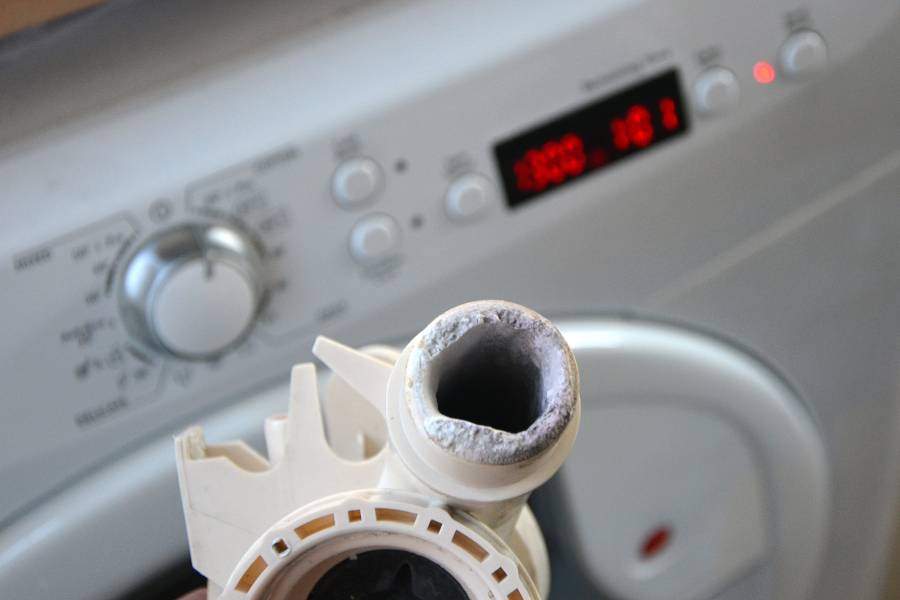
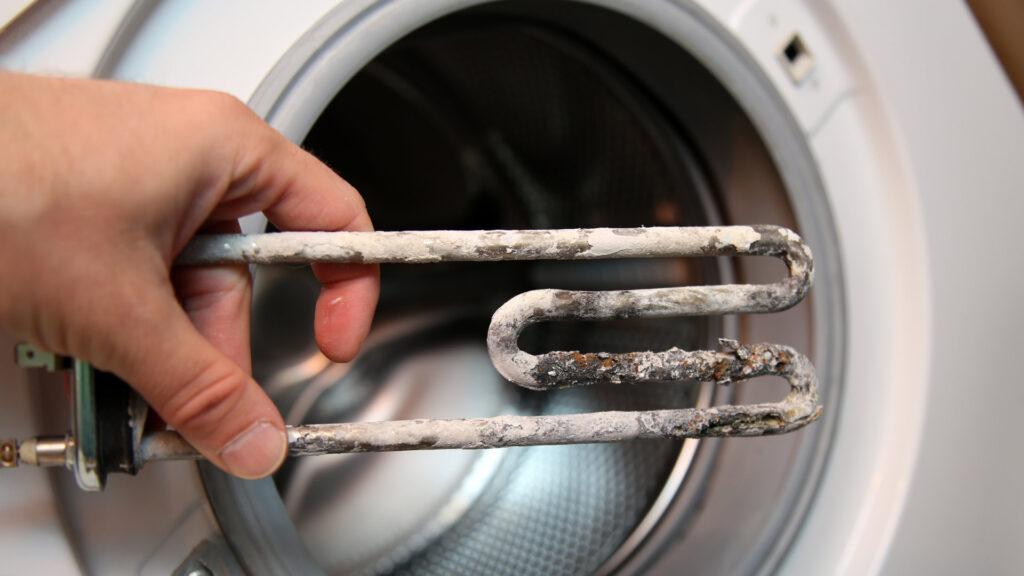
If you live in an area with hard water, every single laundry cycle pumps dissolved calcium and magnesium into your appliance. As the water heats up and evaporates, it leaves behind a rock-hard white crust known as limescale. This scale doesn’t just sit on the visible stainless steel drum; it buries itself deep inside your water inlet valves, coats the internal heating elements, and clogs up the drain pump plumbing lines. Over time, your machine has to work twice as hard, sky-rocketing your utility bills and burning out critical mechanical components.
You do not need to pay a professional plumber hundreds of dollars to de-scale your system. As a senior appliance technician, I am here to tell you that clearing out this mineral armor is a straightforward, budget-friendly afternoon project. Welcome back to FixNest.xyz, your trusted digital manual where we help homeowners bypass expensive service fees. Today, we are diving deep into exactly how to remove hard water buildup from washing machines using safe, highly effective DIY techniques.
The Invisible Threat: How Hard Water Sabotages Your Washer
Hard water is an incredibly sneaky enemy because the worst damage happens behind closed panels where you can’t see it. By the time you notice actual white flakes inside your basket, the internal systems are already struggling.
Before we look at the cleaning steps, check out this technician’s troubleshooting matrix to see exactly how hard water components sabotage your specific washer systems.
| Impacted Component | Visible or Audible Symptom | Hidden Danger to Machine | Urgency Level |
| Water Inlet Valve Screens | Washer takes a very long time to fill; low water pressure errors. | Restricts flow completely, forcing the internal solenoid coils to burn out. | High (Requires screen cleaning) |
| Internal Heating Element | Water doesn’t get hot on warm/hot cycles; clothes don’t clean well. | Thick scale acts as an insulator, causing the element to overheat and snap. | Critical (Saps massive electricity) |
| Outer Tub Outer Walls | Musty, sour odors that don’t go away; gray flakes on dark laundry loads. | Creates a rough, porous surface where mold, soap scum, and bacteria breed. | Medium |
| Drain Pump Propeller | Loud grinding noise during the drainage cycle; slow draining. | Calcified bits break off and jam the spinning impeller blades. | High |
If your laundry setup is showing any of these warning signs, your machine is running on borrowed time. By utilizing the free preventative guides here on FixNest.xyz, you can easily reverse this calcified damage and restore your appliance back to its factory-level thermal efficiency.
The De-Scaling Arsenal: Chemical vs. Natural
When it comes to breaking down rock-hard calcium deposits, you need a liquid solution that can chemically dissolve minerals without destroying the internal rubber gaskets and tub seals. Let us look at your two best options.
Option A: Distilled White Vinegar (The Eco-Friendly Route)
White vinegar contains acetic acid, which naturally reacts with calcium carbonate to break it down into a water-soluble form. It is dirt cheap, 100% safe for the environment, and completely gentle on your internal rubber plumbing boots. This is our preferred daily recommendation at FixNest.xyz.
Option B: Citric Acid Powder (The Heavy-Duty Tech Secret)
If you have never de-scaled your machine and live in a severe hard water zone, vinegar might not be strong enough. Citric acid powder (available in the baking aisle of most grocery stores) is a stronger organic acid. It strips away heavy, layered mineral sheets effortlessly and leaves behind zero sour odor.
Step-by-Step Guide to Removing Hard Water Buildup Completely
Let us walk through the physical cleaning proccess to dissolve the scale from every corner of your laundry system. This method applies beautifully to both modern front-loaders and classic top-loading machines.
Step 1: Disconnect and Clean the Inlet Hose Screens
Many homeowners think their water pump is failing when the machine fills up slowly, but ninety percent of the time, the tiny filters at the back of the machine are simply choked with sand and scale.
Turn off the water supply faucets behind the machine. Unplug the washer from the wall outlet. Carefully unscrew the hot and cold water hoses from the back of the washer cabinet. Look inside the machine’s threaded entry ports—you will see a tiny plastic mesh screen cup.
Using a pair of needle-nose pliers, gently pull those screen cups straight out. Submerge them in a small bowl filled with straight white vinegar for 20 minutes, then use an old toothbrush to scrub away the dissolved crust. Pop them back into place and screw the hoses back on tightly.
Step 2: Clear the Detergent Dispenser Housing
Hard water mixes with liquid fabric softeners to form a sticky, calcified glue inside your detergent drawer. Pull the drawer completely out of the machine by pressing the central release tab.
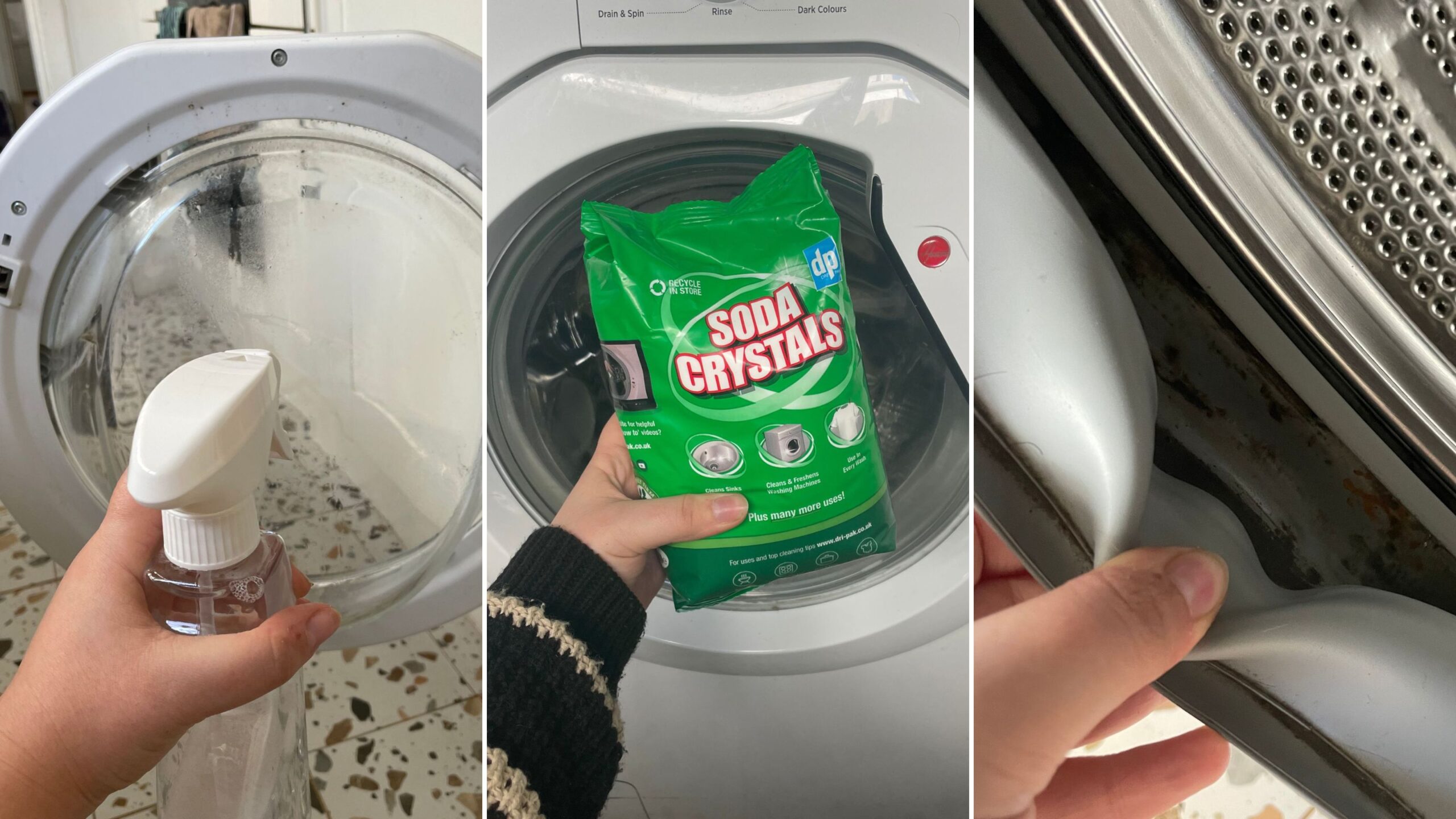
Mix one part hot water with one part vinegar in a spray bottle. Spray inside the empty dark cavity where the drawer sits, focusing heavily on the overhead ceiling spray holes where hard water clogs the water jets. Use a stiff brush to clear the crust, then rinse the plastic drawer under your sink before sliding it back into place.
Step 3: Clean the Front Boot Seal or Agitator Base
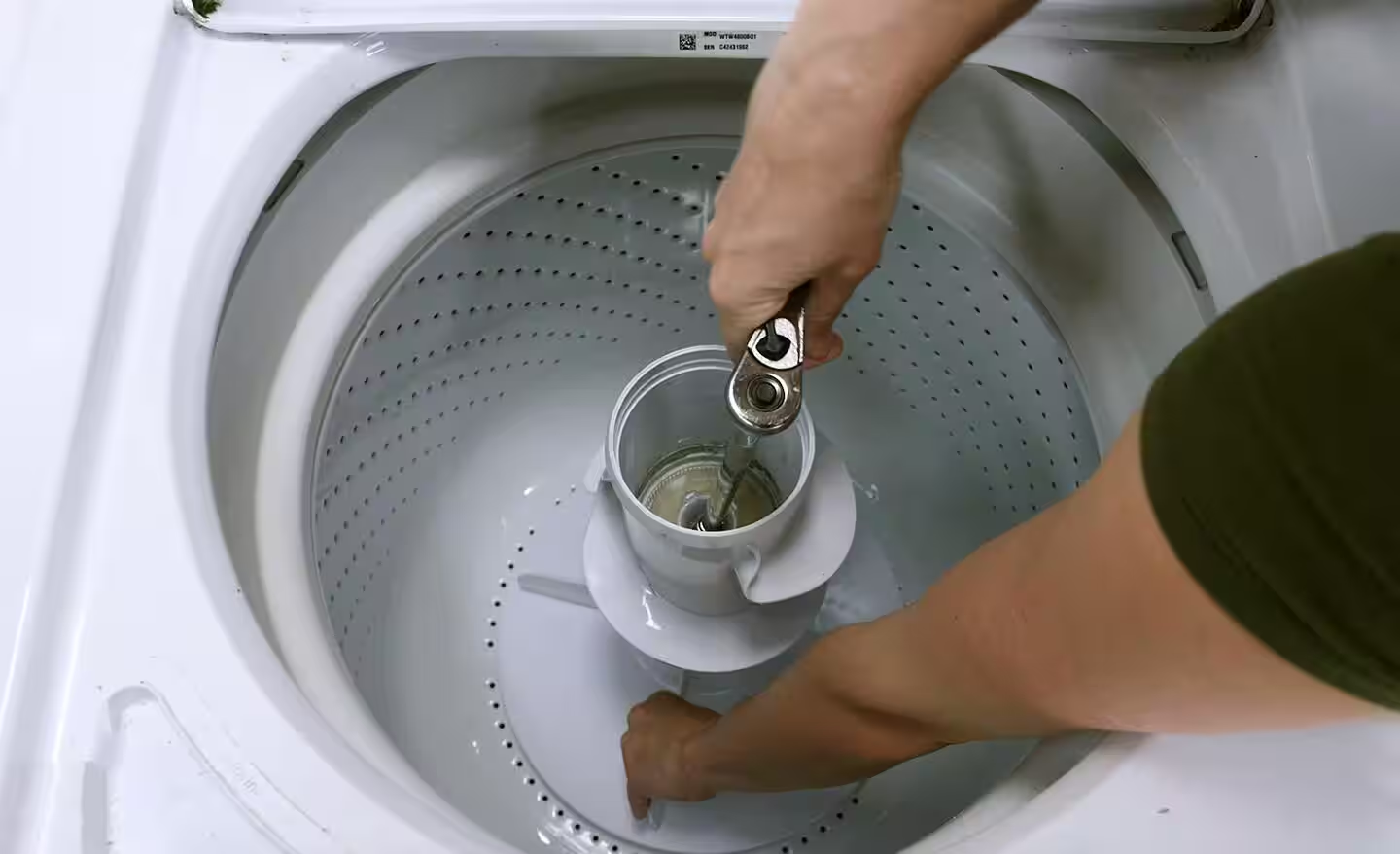
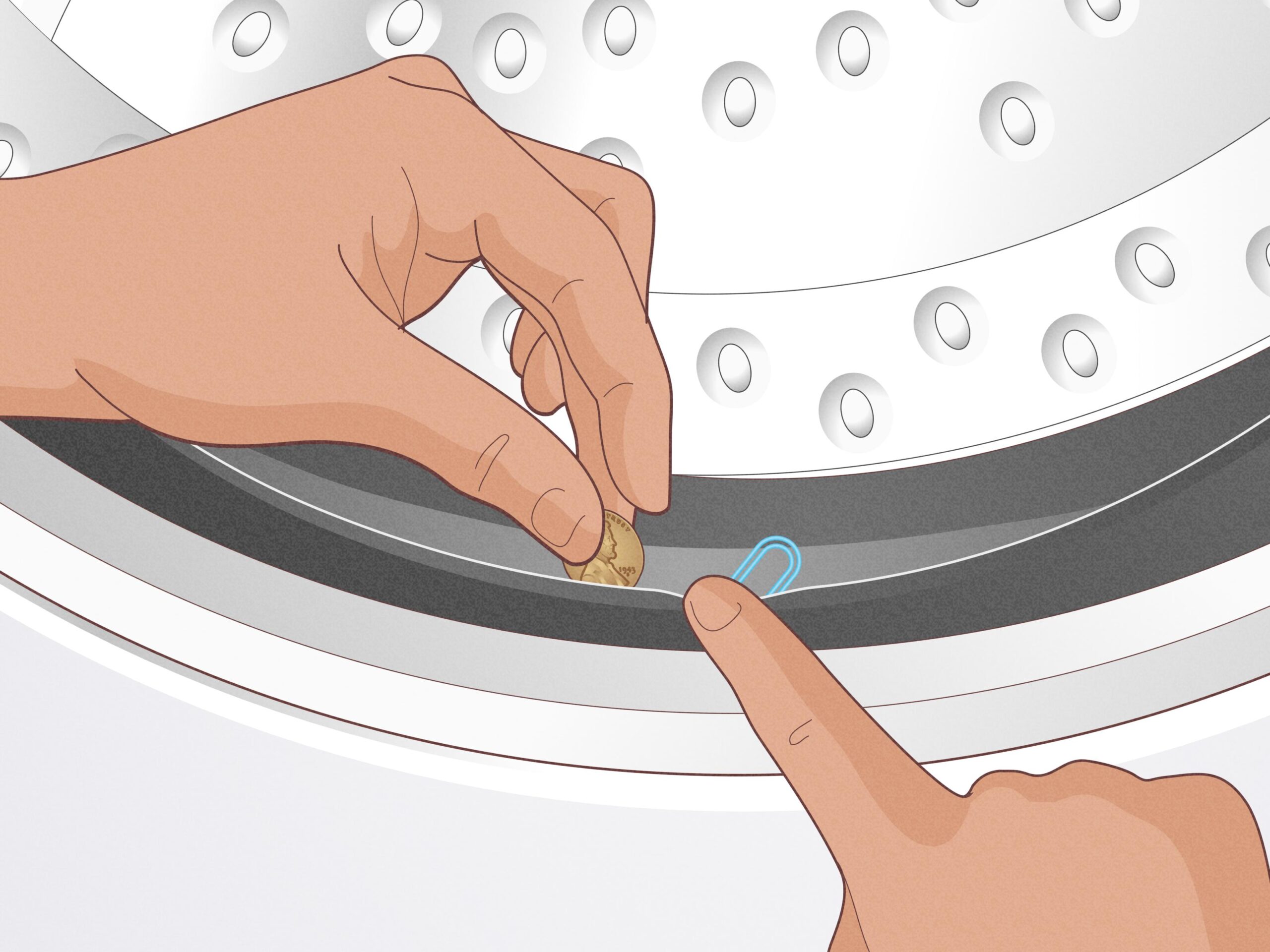
For front-load washers, pull back the folds of the thick gray rubber door boot seal. You will likely find a hard, rough white crust lining the bottom tracks. Spray it heavily with your vinegar solution or a paste made of citric acid and warm water. Let it sit for 15 minutes, then scrub it with a non-scratch kitchen scouring pad until the rubber feels completely smooth. For top-loaders, scrub around the very bottom base of the central plastic column or agitator fins where water pools.
Step 4: The High-Heat Chemical De-Scaling Wash
Now it is time to clear the internal heating elements and the hidden outer drum walls that you can’t reach by hand.
Ensure the washer drum is completely empty of clothes. If you are using distilled white vinegar, pour 4 cups directly into the main drum chamber. If your using citric acid powder, pour 1 cup of the powder straight onto the bottom floor of the drum.
Set your washing machine to its hottest possible setting—usually labeled “Sanitize,” “Tub Clean,” or “Allergen.” Ensure the water temperature is set to maximum. Start the cycle.
Technician Tip: If you own a top-loading machine, allow the tub to fill completely with the hot acid water, let it agitate for 5 minutes, and then hit the pause button. Let the hot solution sit idle inside the machine for at least 1 to 2 hours before unpausing. This extended soak gives the acid time to completely eat through thick, years-old mineral sheets.
Step 5: The Neutralizing Baking Soda Cycle
Once the hot acid cycle drains out completely, the scale will be dissolved, but we want to flush away any remaining loosened debris and neutralize the acidic pH inside the plumbing lines.
Sprinkle 1 cup of baking soda directly onto the floor of the empty drum. Run a second, shorter regular wash cycle on a warm water setting. The baking soda acts as a mild deodorizer and a secondary scrubbing flush to guarantee your next load of dark clothes comes out perfectly spotless.
Step 6: Empty the Lower Drain Pump Filter
As the hard water sheets break apart during the acid wash, small pieces of calcified stone can travel down into your lower drain filter basket. If left there, they will eventually migrate into the spinning pump propeller and destroy the motor.
Open the small access door at the bottom front panel of your washer (for front-loaders). Lay an old towel and a shallow dish down, unscrew the round plastic filter cap slowly, and clear out any stony mineral chips or lint wads trapped inside. Wipe the internal housing chamber clean and screw the plug back on tightly.
How to Prevent Hard Water Buildup From Returning
Now that your laundry machine is completely free of scale, your main goal should be prevention. You don’t want to repeat this deep-cleaning routine constantly. Incorporating a few smart, structural changes into your laundry habits will prevent mineral crust from cementing itself back onto your components.
- Adjust Your Detergent Dosage: Hard water minerals actively fight against laundry soap, preventing it from lathering properly. This causes homeowners to pour in way too much detergent, which worsens the soap scum problem. Look for detergents that contain built-in water softeners (like sodium carbonate), which naturally bind to calcium before it can stick to your steel drum.
- Lower Your Washing Temperatures: Calcium drops out of water solution and turns into solid scale much faster at temperatures above 140°F (60°C). Unless you are washing heavily soiled rags or sanitizing sheets, stick to warm or cool water settings for your standard daily loads. Your heating element will stay cleaner, and your energy bill will thank you.
- Utilize Vinegar as a Fabric Softener: Stop pouring thick, waxy commercial liquid fabric softeners into your machine. They mix with hard water minerals to form an incredibly resilient layer of slime. Instead, pour half a cup of distilled white vinegar into your fabric softener dispenser compartment. It naturally softens your fabrics, strips out lingering soap film, and maintains a clean environment inside the pump lines during every single rinse cycle.
- Consider a Whole-House or Inline Water Softener: If your household water supply is incredibly aggressive, consider installing a dedicated inline polyphosphate water filter directly onto the back inlet hoses of your washing machine. These cheap filters condition the incoming water supply, trapping scale-forming minerals before they ever cross into your appliance plumbing.
Long-Term Laundry System Maintenance Checklist
To maximize your washing machine’s operational lifespan and protect your household wallet from unexpected repair failures, try to adhere to this simple technician-approved seasonal schedule:
[Every Wash Load] -> [Leave door/lid open to air-dry, use correct soap dosing]
       |
[Once a Month]    -> [Run a preventative hot vinegar or citric acid wash]
       |
[Every 4 Months]  -> [Unscrew and clear debris from the lower pump filter]
       |
[Once a Year]     -> [Pull and clean the rear water inlet hose mesh screens]
By sticking to this simple timeline, you ensure your water assembly doesn’t undergo unnecessary mechanical strain, effectively adding five to ten years to the operating lifespan of your unit.
Your Trusted Manual for Everyday Appliance Savings
Taking care of your major household systems shouldn’t require you to empty your bank account every time a maintenance issue arises. With a little bit of time, the right tools, and a reliable blueprint, you can confidently keep your home running smoothly on your own terms.
If you found this de-scaling guide simple and empowering, make sure to bookmark FixNest.xyz so you always have a professional appliance technician manual available for your next household fixing project. Don’t forget to subscribe to our monthly newsletter below to receive timely maintenance reminders and cash-saving repair tips delivered straight to your email inbox.
Did you run into a problem trying to clear a heavily rusted inlet valve screen? Or maybe your machine is still filling up incredibly slowly even after a deep citric acid flush? Leave a comment down below right now! I read through our community comments personally and will help you figure out exactly how to get your machine running like brand new again. Let us get that hard water cleared out!